
From the new facility, buses would be rolled out from the second quarter of 2015

'I believe that to be a successful leader, you need to develop fly vision.'

A PTI tally of figures announced by different states and union territories, as of 9.25 pm, showed a higher number of 1,76,792 confirmed cases and at least 5,100 deaths. It also showed nearly 86,000 recoveries and close to 85,700 active cases.

An ambitious project to awaken a sleeping giant of Asian soccer looks like confirming Nobel laureate Amartya Sen's famous remark that India pricks up its ears only when comparisons with China are made. With China embarked on a multi-billion dollar mission to become a soccer superpower by 2050, India looks set to follow suit with its own plan to raise its status in the game to match its burgeoning economic power. Come October, India, most famously described as soccer's sleeping giant by former FIFA president Sepp Blatter, will launch a programme to engage more than 11 million children in soccer-related activities.

Sadly, for hundreds of millions in India, that inequality from their birth and the utterly inadequate schooling and health care they receive thereafter mean that the lottery is stacked against them.

Incoming US President Donald Trump has assembled a core team that is -- not surprisingly -- overwhelmingly white and male.

'We teach our kids the 3 R's -- reading, writing, and arithmetic -- so that they can be successful. It's time the fourth R joined that list: Programming. My vision is to expose every student to computer science and show them that coding IS fun and applicable to their daily lives.' Just 15, Swetha Prabakaran, founder and CEO of Everybody Code Now!, a non-profit working to empower the next generation of youth to become engineers, scientists and entrepreneurs, is already a White House Champion of Change for teaching hundreds of students how to code.

In the next few weeks, the Bombay High Court will hear the institute's petition to review its 2011 directive to vacate the land it occupies in Film City.

A large chunk of the Rs 8.8 lakh crore of investments the Patnaik government had attracted is in uncertain territory.
'50% of students lose out because of lack of English language skills.' 'Only 15% to 20% have the functional skills companies are looking for.'

When is the last time our government recognised a twenty something entrepreneur for introducing a break-out innovation?
Overseas education consultant NNS Chandra offers advice on how to pick the right international education.

It's crucial for Modi to make India an easier place to do business.

And no, the commercial sporting leagues didn't cause the drought, says Shekhar Gupta.

The Forbes 30 Under 30 list is harder to get into than Stanford or Harvard University. Meet the desis who made the cut this year.

Can we make high speed 4G Internet available at 10 cents per GB, and make all voice calls free of cost -- that too in a large and diverse country like India? Can we make high-quality but simple breast cancer screening available to every woman, that too at the extremely affordable cost of $1 per scan? Can we make a portable, high-tech ECG machine which can provide reports immediately and that too at the cost of 8 cents a test? Can we make an eye imaging device that is portable, non-invasive and costs 3 times less that conventional devices? Can we make a robust test for mosquito-borne dengue, which can detect the disease on day 1, and that too at the cost of $2 per test? Amazingly, says Dr R A Mashelkar, the eminent scientist, all this has been achieved in India, not only by using technological innovation but also non-technological innovation.

The elements are all aligned to make India a global powerhouse, says IMF Managing Director Christine Lagarde.

Nobel Peace prize winner Malala Yousafzai, Obama's daughters and Joshua Wong, the face of the Hong Kong protests against China have been named by Time magazine among its list of the 25 most influential teenagers of 2014.

'Make in India' could suffer the same fate as did privatisation and the command economy, says Ajit Balakrishnan.

Rediff.com gives you a look at newbies in the Council of Ministers
Following is the full text of Prime Minister Narendra Modi's address from the ramparts of the Red Fort on the 73rd Independence Day.

Modi cannot afford to fail the Indian people and in return the Indian people cannot fail Modi. There is too much riding on this equation for failure to be an option. There is too much invested in this relationship for it to splinter, says Vivek Gumaste.

PepsiCo India's new CEO admits to being an ardent follower of the world's management gurus and they clearly mould his outlook.

We have brought about a slew of reforms that would help improve governance and also facilitate industrial growth, Rajasthan Chief Minister Vasundhara Raje tells Sahil Makkar.

'It all runs on sugar-coated lies. If I like something, I will want to believe it.'
Rajeev Chandrasekhar discusses five issues pivotal for the success of Digital India

13 out of the world's 20 most polluted cities are in India. Most shockingly, the latest Central Pollution Control Board statistics reveal that the pollution levels in Gwalior, Raipur and even little known Kashipur are higher than that of Delhi which means we have some of the most polluted zones in the world.
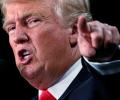
The US foreign and security policy establishment, says Ambassador M K Bhadrakumar, apprehends that Trump may compel them to exorcise the 'unipolar predicament', and bring foreign and security policies to reflect the desires and priorities of the American public.

President Pranab Mukherjee on Monday addressed the first joint sitting of Parliament as mandatorily required under the Constitution after the general elections. The address is the political, economic and foreign policy road map of the Narendra Modi government and covers virtually all crucial areas.
 © 2026 Rediff.com - Advertise with us - Disclaimer - Privacy Policy - Sitemap - Feedback - About us - Terms of use - Grievances